Guías
Best Time to Visit Colombia: Weather City by City
When to visit Colombia based on the weather in Bogotá, Medellín, Cali and Cartagena, the rainy seasons, high season, and festivals worth planning around.
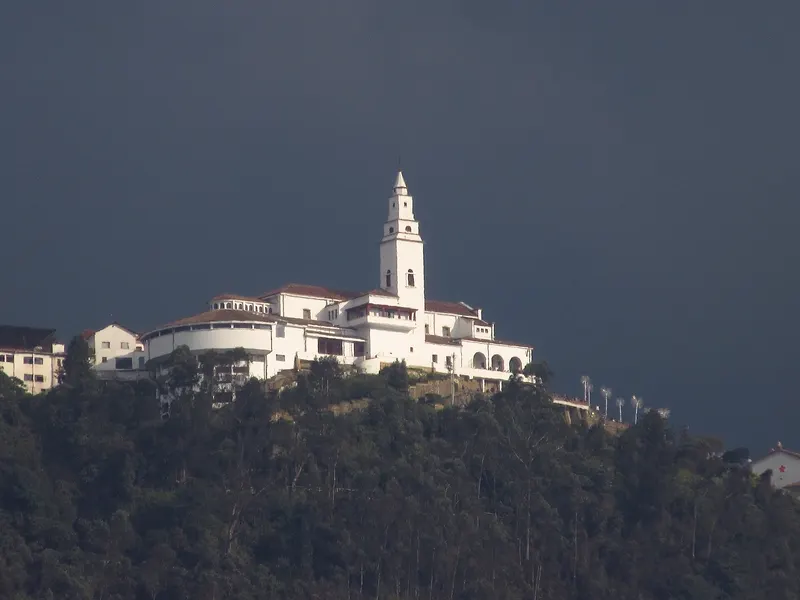
Colombia sits close to the equator, so it doesn't have four seasons the way many countries do. Temperature depends almost entirely on altitude — the higher you go, the cooler it gets. What actually changes through the year is rainfall. So the real question isn't "when is it hot," it's "when does it rain the least" wherever you're headed, and when there are fewer crowds and better prices.
How the seasons work
In the Andean region — Bogotá, Medellín, and Cali — the year usually has two rainy seasons (roughly March to May and September to November) and two drier stretches in between. The Caribbean coast follows a different pattern: one long dry season early in the year, and rain concentrated in the second half.
A "rainy season" almost never means rain all day. The norm is a strong but short downpour in the afternoon. And El Niño or La Niña can push any of these seasons earlier, later, longer, or weaker than usual.
Rain, city by city
The figures below come from IDEAM, Colombia's meteorological authority, which publishes monthly averages from its airport weather stations. These are long-term averages — any given year can run drier or wetter.
Cali: warm and welcoming, every month of the year
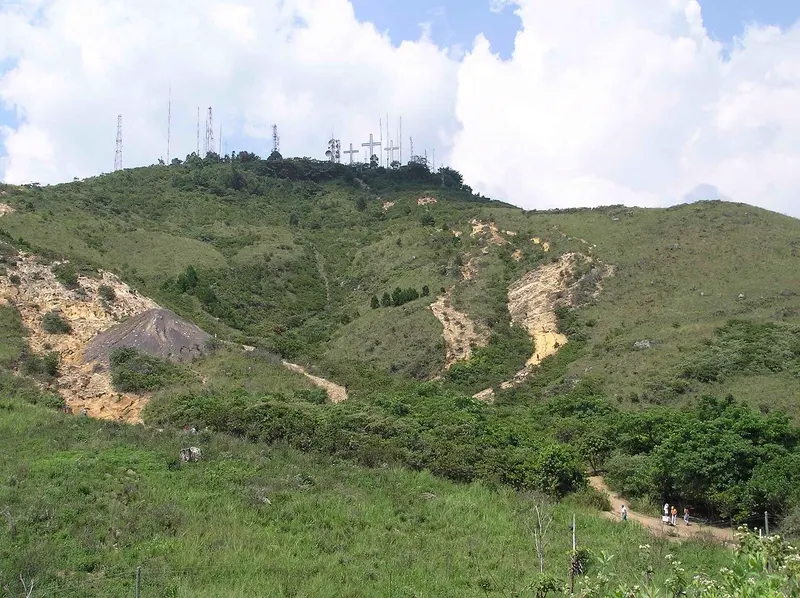
Cali is the city where the "best time to go" question matters least, and that's exactly the point. It sits at around 1,000 meters, warm and sunny in every single month, with no real cold season to plan around. July is the driest month (around 28 mm), followed by August, January, and February. April and October are the wettest, with over 110 mm — still nowhere near a washout, since a Cali "rainy" afternoon is usually a strong shower followed by a clear evening. That means Cali's best weather lines up neatly with its two biggest parties: the Petronio Álvarez festival (August) and the Feria de Cali (December, when rain is already moderate). More in our Cali guide.
Bogotá
January is the driest month, with about 29 mm and eight rainy days on average. April and October are the wettest, with over 100 mm and around 18 rainy days. The city government sums up the year this way: the dry months are January, February, July, and August, and the rest run more humid. Whatever the date, pack a rain jacket. More in our Bogotá guide.
Medellín
The driest stretch runs December to February: January averages around 61 mm. There's a short, mild break mid-year too, with July slightly drier than May or August. October is the wettest month, with about 220 mm and up to 25 rainy days, followed by May. December usually falls right in the dry season, which is part of why its Christmas lights display is such a big deal. More in our Medellín guide.
Cartagena
From January to March it barely rains — under 5 mm a month on average. Rain picks up in May, and October is the wettest month, with around 200 mm and 16 rainy days; November stays humid and December turns dry again. It's hot year-round, so rain and crowds are what really set the months apart. More in our Cartagena guide.
Other destinations people add to the trip
- The Coffee Region: rain year-round. In Armenia, according to IDEAM, April, October, and November top 250 mm, while July and August are the driest months. The main coffee harvest falls in the last quarter of the year, with a smaller mid-year harvest, the mitaca.
- Santa Marta and Tayrona: very dry December to April, wetter May to November. Watch for park closures: in 2026 they run February 1–15, June 1–15, and October 19 to November 2.
- Villa de Leyva: dry, sunny days with cold nights.
- San Andrés and the Caribbean: hurricane season runs June 1 to November 30, most active between August and October. IDEAM and Colombia's disaster-risk agency flag the San Andrés and Providencia archipelago as the most exposed area.
El Niño 2026–2027: what it means for your trip
On June 11, 2026, Colombia's Ministry of Environment announced that El Niño conditions had already arrived, about three months earlier than expected, likely lasting into early 2027 and possibly reaching "very strong" intensity by year's end. The Caribbean, Andean, and Pacific regions are the most exposed to below-normal rainfall.
For a traveler, that usually means more dry days, more heat, and stronger sun. It also raises wildfire risk and lowers river and reservoir levels. In practice:
- Drink more water and wear sunscreen, even in Bogotá.
- Respect campfire bans in parks and on trails.
- Check IDEAM alerts before hikes and river outings.
High season and long weekends
Flight and hotel prices track both the Colombian calendar and the weather. The busiest stretches are:
- Mid-December to mid-January: the most expensive season, especially in Cartagena and along the coast.
- Holy Week: in 2027, it runs March 21–28.
- Mid-year school break: mid-June to mid-July.
- October school break: in 2026, public schools are out October 5–9, running into the Monday, October 12 holiday.
Colombia has a lot of Monday holidays, and Colombians travel domestically on those long weekends. The remaining ones in 2026 are Monday, October 12; Monday, November 2; Monday, November 16; Tuesday, December 8; and Friday, December 25. If you're traveling on any of those dates, book ahead.
Festivals worth planning around
- Barranquilla Carnival: the four days before Ash Wednesday; in 2027, February 6–9.
- Feria de las Flores, Medellín: late July into early August; in 2026 it ran July 31 to August 9.
- Petronio Álvarez Festival, Cali: usually held in August. The 2026 edition was suspended after the August 10 earthquake, and the city announced it would be rescheduled later in the year — check official channels for the new date. More in our Petronio Álvarez guide.
- Christmas lights and the holidays: starting late November or early December.
- Feria de Cali: December 25–30. The city government confirmed the 2026 edition will go ahead, as part of Cali's recovery push. More in our Feria de Cali guide.

Month by month, in one line
- January: dry almost everywhere; the first half is still high season.
- February: one of the driest, quietest months.
- March: the shift into the Andean rains begins; Holy Week, depending on the year.
- April and May: first rainy season in the Andes; the Caribbean coast is still dry in April.
- June: school holidays begin; the Caribbean coast is already in its rainy season.
- July and August: less rain in Bogotá and Cali, plus festival season.
- September: quiet, with good rates.
- October: the wettest month in Medellín and Cartagena; school break.
- November: rainy; moderate prices outside long weekends.
- December: dry weather returns and high season kicks in.
So, when should you go?
If you want to combine all four cities with good weather, mid-January to February is the best window: dry on the coast and in the Andes, and past the year-end peak. December is dry too and full of festivities, but it's the most expensive season. July and August are another strong option for Bogotá, Medellín, and Cali, with festivals built in, though the Caribbean coast is already wetter by then. And if warm weather matters more than the calendar, Cali solves the problem outright — it's a good call any month of the year.
Frequently asked questions
What's the cheapest month to visit Colombia?
Outside high season: February, March (if it misses Holy Week), September, and November away from long weekends. Avoid the second half of December, the first half of January, and Holy Week if price is your priority.
Is Colombia cold?
It depends on altitude. Bogotá is cool year-round, with nights of 8–10 °C (46–50 °F); Medellín is mild; Cali and Cartagena are hot pretty much every day of the year.
When does it rain in Cartagena?
Based on IDEAM averages, rain runs from May to November, with October the wettest month. December through April is the dry season.
What's the best time to visit Cali?
Any time — that's the point. Cali's climate barely changes month to month, so pick your dates around festivals instead: August for Petronio Álvarez, or December 25–30 for the Feria de Cali.
How does El Niño affect a trip to Colombia?
It usually brings less rain and more heat, especially on the Caribbean coast and in the Andean and Pacific regions. For late 2026 and early 2027, the government warned it could be very strong: pack sun protection, drink plenty of water, and follow IDEAM alerts.
Keep reading
 BogotáBogotá: a guide to Colombia's capitalWhat to do in Bogotá: La Candelaria, the Gold Museum, Monserrate, the Botero Museum, Usaquén, Ciclovía and the Salt Cathedral. Weather, food, tips.
 CaliCali: A Complete Guide to the World Capital of SalsaWhat to see and do in Cali: San Antonio, Cristo Rey, La Ermita, the riverside boulevard, the zoo, salsa, local food, weather and travel tips.
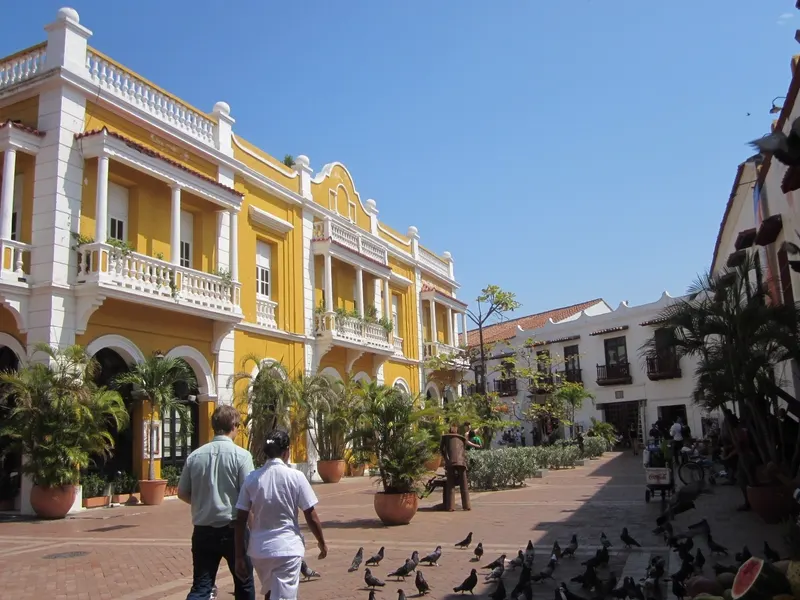 CartagenaCartagena: a guide to the walled city and its islandsWhat to do in Cartagena: the walled city, Getsemaní, Castillo San Felipe, La Popa, the Rosario Islands, Playa Blanca, food, weather and trip tips.