Guías
10-Day Colombia Itinerary: Bogotá, Medellín, Cali and Cartagena
A 10-day route through Bogotá, Medellín, Cali and Cartagena — what to do each day, how to travel between cities and tips to make the most of your time.
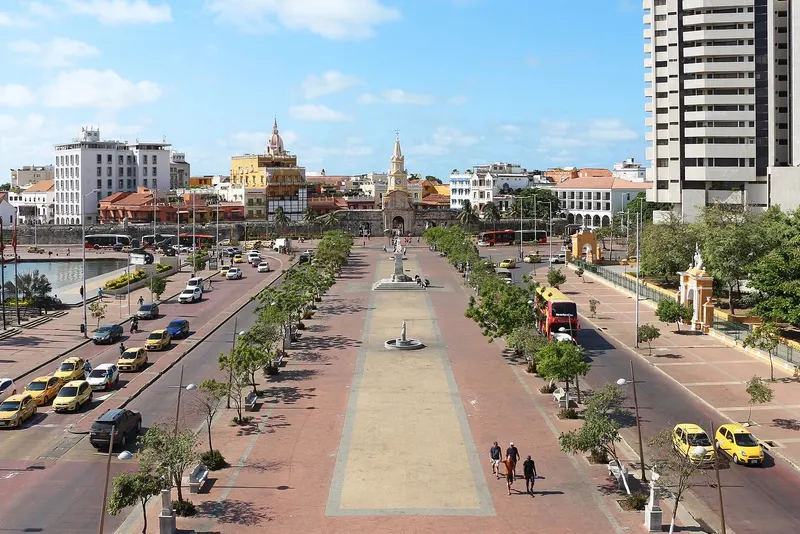
Ten days is enough to see Colombia's four biggest cities at a relaxed pace, plus two classic day trips. Between cities, flying is the way to go — road distances are long and the mountain routes are slow. There are frequent domestic flights connecting all four cities, most of them around an hour long.
This route runs from the mountains to the sea: it starts in Bogotá, which has the widest range of international flights, and ends with a few days on the Caribbean coast in Cartagena. Below is the day-by-day plan, how to adjust it depending on the day of the week, and three variations if you'd rather swap out a city.
Days 1 to 3: Bogotá
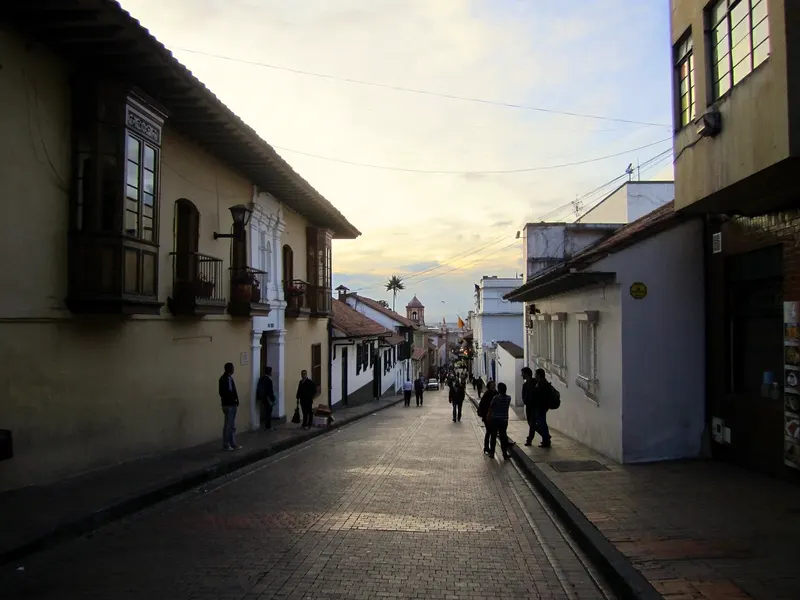
Day 1. Arrival and altitude adjustment. Bogotá sits at around 2,640 meters (8,660 ft), so it's worth taking the first day slow. In the afternoon, a short walk through La Candelaria, the Chorro de Quevedo and Plaza de Bolívar. Keep dinner light, go easy on alcohol, and turn in early.
Day 2. La Candelaria, museums and Monserrate. In the morning, a walking tour of the historic center. Then the Museo Botero and the Museo del Oro (Gold Museum), a few blocks apart; the Gold Museum closes on Mondays, even holidays, and is free on Sundays. At sunset, head up to Monserrate by cable car or funicular, and bring a jacket — at 3,152 meters (10,340 ft), it's cold up there. If you'd rather hike up, save it for another day: the trail only allows climbers in the morning and doesn't open on Tuesdays.
Day 3. Zipaquirá Salt Cathedral. About 40 km (25 miles) north of Bogotá. If it falls on a Saturday, Sunday or public holiday, take the Tren Turístico de la Sabana (Sabana Tourist Train), which departs from the west side of the Gran Estación mall, stops in Usaquén, and takes up most of the day — spots sell out, so book ahead. On weekdays, take TransMilenio (Bogotá's bus rapid transit) to Portal Norte and a bus on to Zipaquirá: a fairly long half day. If it's a Sunday, get up early for the Ciclovía (7:00 a.m. to 2:00 p.m., when major roads close to cars for cyclists and runners) and finish at the Usaquén flea market.
For more on Zipaquirá and the rest of the city, see our guide to Bogotá and, for meals, Colombian food.
Days 4 to 6: Medellín
Day 4. Flight and downtown. The flight takes about an hour and lands at Rionegro airport, roughly 30 to 40 minutes from the city by airport bus. In the afternoon, visit Plaza Botero and the Museo de Antioquia, then ride the Metrocable's K line from Acevedo to Santo Domingo for views over the valley.
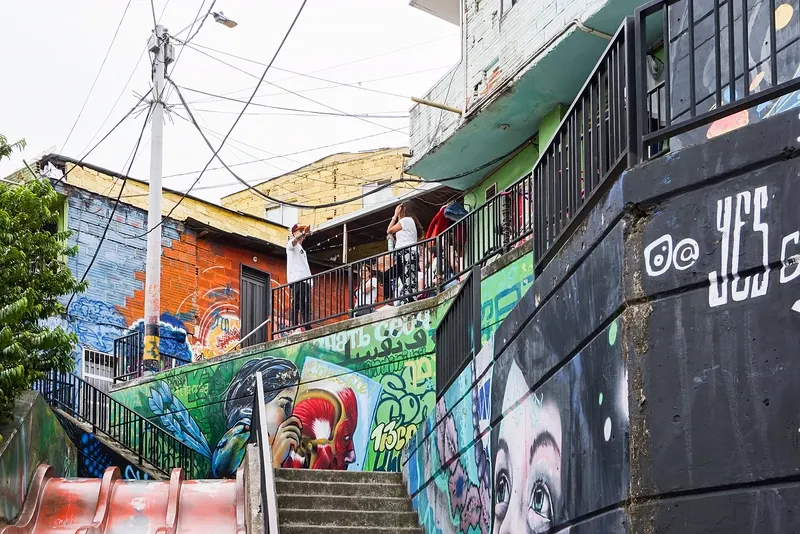
Day 5. Comuna 13 and the city's north side. Take the metro to San Javier and tour Comuna 13 in the morning with a local guide. In the afternoon, the Jardín Botánico (free) and Parque Explora, next to the Universidad metro station; Explora is closed on Mondays, or on Tuesday when Monday is a public holiday. Have dinner in Provenza or Laureles. If it's not a Tuesday, you can swap the afternoon for the cable car up to Parque Arví instead.
Day 6. Guatapé and La Piedra del Peñol. A full day out. Head early to the Terminal del Norte bus terminal; the ride takes about two hours. Climb the rock's 740 steps before midday and have lunch in the colorful zócalo-painted town below.
For more on Guatapé and the rest of the city, see our guide to Medellín and, for meals, Colombian food.
Days 7 and 8: Cali — the heart of this trip
Save real time for Cali. Of the four cities on this route, it's the one where an extra day pays off the most: warm weather day and night, a walkable riverside center, and Colombia's best-known salsa scene, all wrapped around genuinely distinctive food you won't find the same way anywhere else in the country.
Cali was one of the cities hit hardest by the August 10, 2026 earthquake. Its airport returned to normal operations the very next day, and the city is welcoming travelers again, though some sites reopened in stages. Confirm the status of each plan with your accommodation before heading out — most of what follows is running as usual.
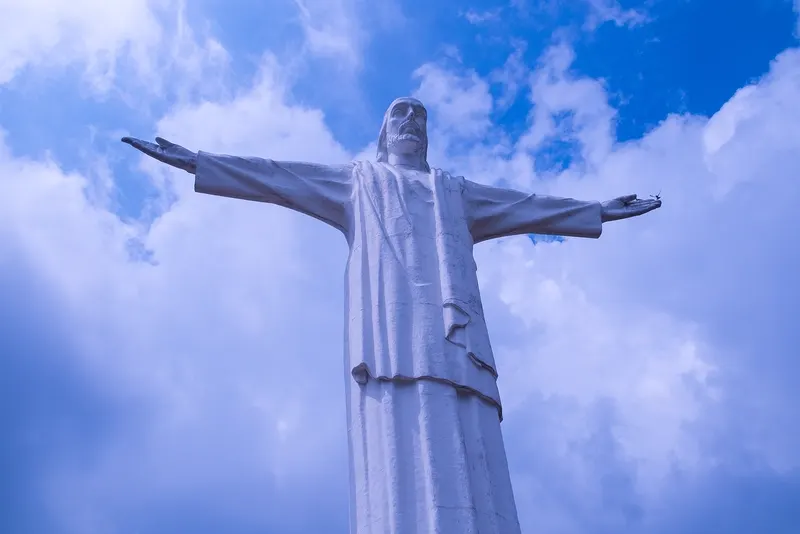
Day 7. Arrival, Cristo Rey and San Antonio. The flight takes about an hour and lands at Alfonso Bonilla Aragón airport, in Palmira, roughly 30 to 40 minutes from the city. In the afternoon, visit Cristo Rey: the hilltop ecopark reopened partially on August 22, 2026, with the monument area accessible. Round out the day with sunset over San Antonio park and dinner in that neighborhood — cobblestone streets, colonial-style houses and some of the city's best small restaurants, all walkable in an evening.
Day 8. Downtown, the river and salsa at night. Spend the morning at the Bulevar del Río and La Ermita church before the heat sets in — the church reopened after the earthquake. In the afternoon, choose between the Cali Zoo, which kept operating after post-earthquake inspections, or an afternoon swim in the Pance River if it's a weekend — the same river that's long been the classic setting for a traditional paseo de olla (riverside cookout with sancocho soup). At night, don't skip a salsa class followed by a night out dancing: Cali calls itself the salsa capital of the world, and this is where you find out why. Full details in our salsa in Cali guide.
If you can stretch it to three days, do it. A third day in Cali gives you room for the Galería Alameda market, where Pacific-coast cooks serve fish sancocho, ceviche and ajiaco-style rice dishes in a lively market-hall setting, plus time to try a lulada or a cholado — a shaved-ice dessert with fruit, syrup and condensed milk that actually originated just outside the city. It's also worth checking dates against Cali's two big events: the Petronio Álvarez Festival, the country's largest celebration of Pacific coast music and cuisine, usually held in August, and the Feria de Cali, a massive end-of-year salsa fair from December 25 to 30. Landing your trip near either one is worth rearranging this whole itinerary for.
For the full picture, see our guide to Cali and traditional food in Cali.
Days 9 and 10: Cartagena
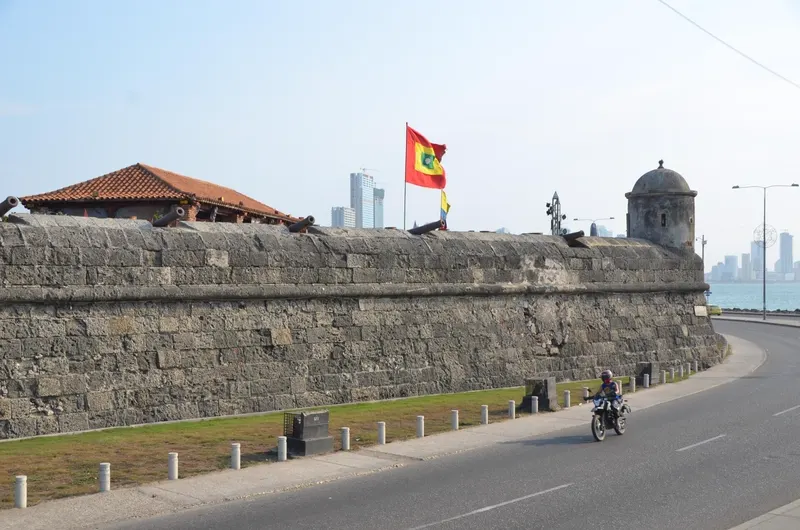
Day 9. Flight and the walled city. There are direct flights between Cali and Cartagena of around an hour and a half. The airport is about ten minutes from downtown. Walk the walled city starting at the Torre del Reloj as the sun goes down, continue on to Getsemaní and Plaza de la Trinidad, and watch the sunset from the city walls.
Day 10. Rosario Islands. Boats leave in the morning from the La Bodeguita dock, and the ride takes one to two hours depending on the island. Since March 1, 2026, the national park has required mandatory insurance for every visitor — confirm whether your tour includes it.
For more on the islands and the rest of the city, see our guide to Cartagena and, for meals, Colombian food.
Adjusting the plan by day of the week
- Monday: the Museo del Oro and Parque Explora are closed. A good day for Zipaquirá or Guatapé instead.
- Tuesday: the Arví cable car and Monserrate's walking trail are both closed.
- Sunday: Ciclovía, Usaquén market and free entry to the Museo del Oro in Bogotá, but everything is busier.
- Weekends and holidays: the Tren Turístico runs to Zipaquirá, and Guatapé, the Pance River and the Rosario Islands get crowded — head out early.
Three variations on the route
Add the Coffee Region (12 or 13 days)
Add two or three days between Medellín and Cali: about a five-hour bus ride from Medellín to Pereira and on to Salento, then a three-to-four-hour bus from Armenia to Cali on the way out. This region also felt the earthquake; as of mid-September 2026, Salento, Cocora and Filandia were open and Pereira's airport was operating at reduced capacity. Check road and airport conditions before you go — see more highlights in our guide to Colombia's must-see places.
Add Santa Marta and Tayrona
Swap out Cali for two or three extra days on the Caribbean coast: Santa Marta is about four hours from Cartagena by road. Check Tayrona National Park's closure dates (in 2026, the park closes from October 19 to November 2) and current safety guidance — as of September 2026, the UK government cited reinforced security measures in Santa Marta and risks along the Troncal del Caribe highway. Keep our safety guide handy if you add this leg.
Add Villa de Leyva
If colonial towns appeal to you more than Cali's salsa scene, swap in two days in Villa de Leyva instead, about three and a half hours by bus from Bogotá, reordering the route as Bogotá, Villa de Leyva, Medellín and Cartagena. See more highlights in our guide to Colombia's must-see places.
If you only have a week, stick to two cities and go deeper into each one instead of rushing through four.
What to book in advance
- Domestic flights: prices climb fast in high season and around long weekends. Compare final prices including checked bags.
- Cartagena hotels: the most in-demand of the four cities, especially from mid-December to mid-January.
- Tren Turístico de la Sabana: weekend seats sell out.
- Cali in December: if your trip lines up with the Feria de Cali, December 25–30, book months ahead.
Check seasons and weather windows in our best time to visit guide before you lock in flights and hotels.
Tips for the route
- Fly in the morning: delays pile up through the day, and you'll land with daylight left. More on airports and transfers in our guide to getting around Colombia.
- Pack in layers: Bogotá is cool, Medellín mild, and Cali and Cartagena hot. Full packing list coming soon.
- Save Cartagena for last: after moving between cities, a few days by the sea feel well earned.
- Keep our safety guide handy, especially for getting around after dark.
Frequently asked questions
Is it better to fly or take the bus between cities?
Fly. Road trips between these cities can take anywhere from 8 to over 20 hours because of the mountains, while flights take around an hour.
What's the best order to visit the cities in?
Start in Bogotá, usually the international arrival point, and end in Cartagena to relax by the sea. If your flight lands in Medellín or Cartagena instead, you can simply reverse the order.
Is ten days enough for Colombia?
For these four cities, yes. To explore more regions, like the Coffee Region or Santa Marta, plan on two or three extra days for each one.
Can Cali still be included after the August 2026 earthquake?
Yes. The airport is operating normally and the city is welcoming travelers, though some sites, like Cristo Rey, reopened in stages. Confirm the status of each place before you go.
When is the best time to do this route?
Mid-January to February is usually the best window: dry in the Andes and on the Caribbean coast, and past the year-end travel rush. July and August also work well for Bogotá, Medellín and Cali.
Keep reading
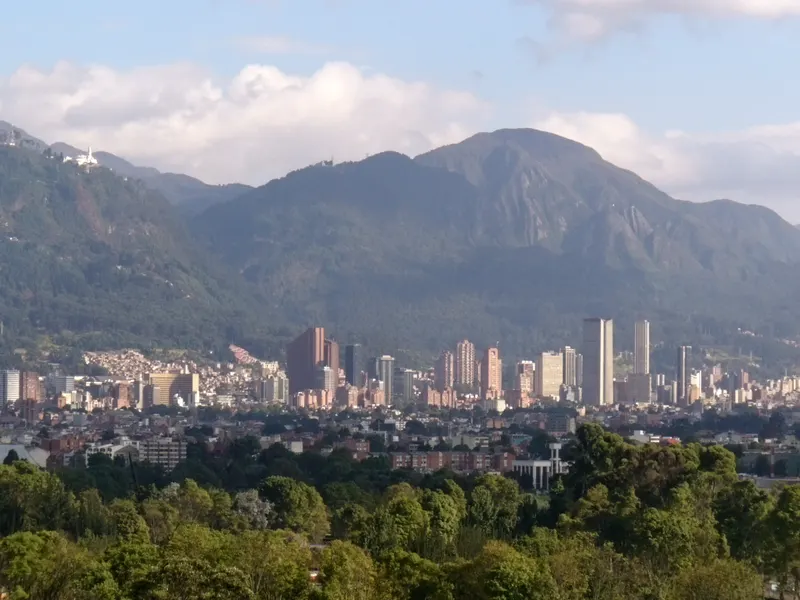 BogotáBogotá: a guide to Colombia's capitalWhat to do in Bogotá: La Candelaria, the Gold Museum, Monserrate, the Botero Museum, Usaquén, Ciclovía and the Salt Cathedral. Weather, food, tips.
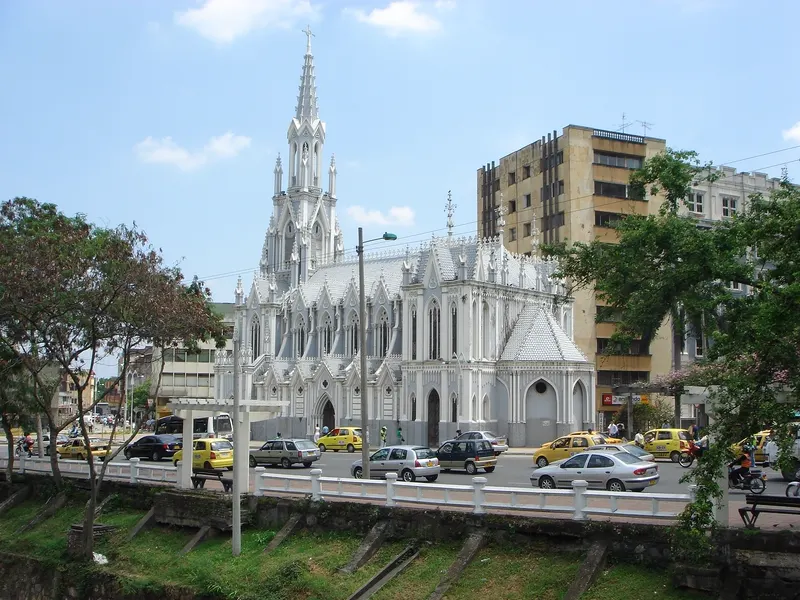 CaliCali: A Complete Guide to the World Capital of SalsaWhat to see and do in Cali: San Antonio, Cristo Rey, La Ermita, the riverside boulevard, the zoo, salsa, local food, weather and travel tips.
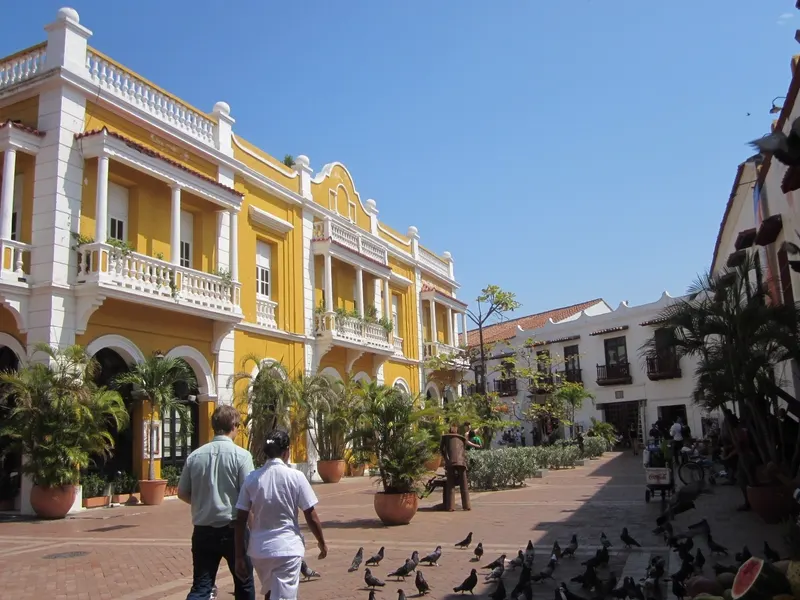 CartagenaCartagena: a guide to the walled city and its islandsWhat to do in Cartagena: the walled city, Getsemaní, Castillo San Felipe, La Popa, the Rosario Islands, Playa Blanca, food, weather and trip tips.